Post

Choosing the wrong ASM platform can you leave you drowning in noise or blind to real risk. This blog will help you assess vendors clearly and invest in a solution that actually strengthens your external security posture.
You can’t protect what you can’t see. It’s as simple as that. However, any cyber professional will tell you that running an Attack Surface Management (ASM) program is anything but simple. You’re not just in a race with external attackers – you’re also trying to keep pace with constant changes to the environment you need to secure. Whether it’s the engineering team accidentally creating an open code repo, HR implementing a new third-party platform, or marketing deploying a campaign on infrastructure that’s unseen by security.
Your attack surface is always evolving and expanding, making it difficult to keep up. This is where ASM is crucial. By continuously discovering assets, checking them for exploitable vulnerabilities, and ensuring your security posture reflects your actual digital footprint, ASM helps reduce this risk.
If you’re currently looking for an ASM vendor or you’re in the process of evaluating the tool you’re currently using, this blog will arm you with the questions to ask, helping you to cut through the noise and choose the best ASM vendor to defend your organization against the latest threats.
Infrequent scans can leave your attack surface exposed. Threats evolve by the hour, not by the day so hourly scans will give you real-time visibility into every exposed asset, misconfigured service, and shadow IT risk as it emerges. This is why it’s important to determine the vendor’s scan frequency and ability to manage asset changes. Scanning daily, weekly, or monthly can result in a significant gap between a vulnerability’s introduction and its detection and remediation, leaving you exposed.
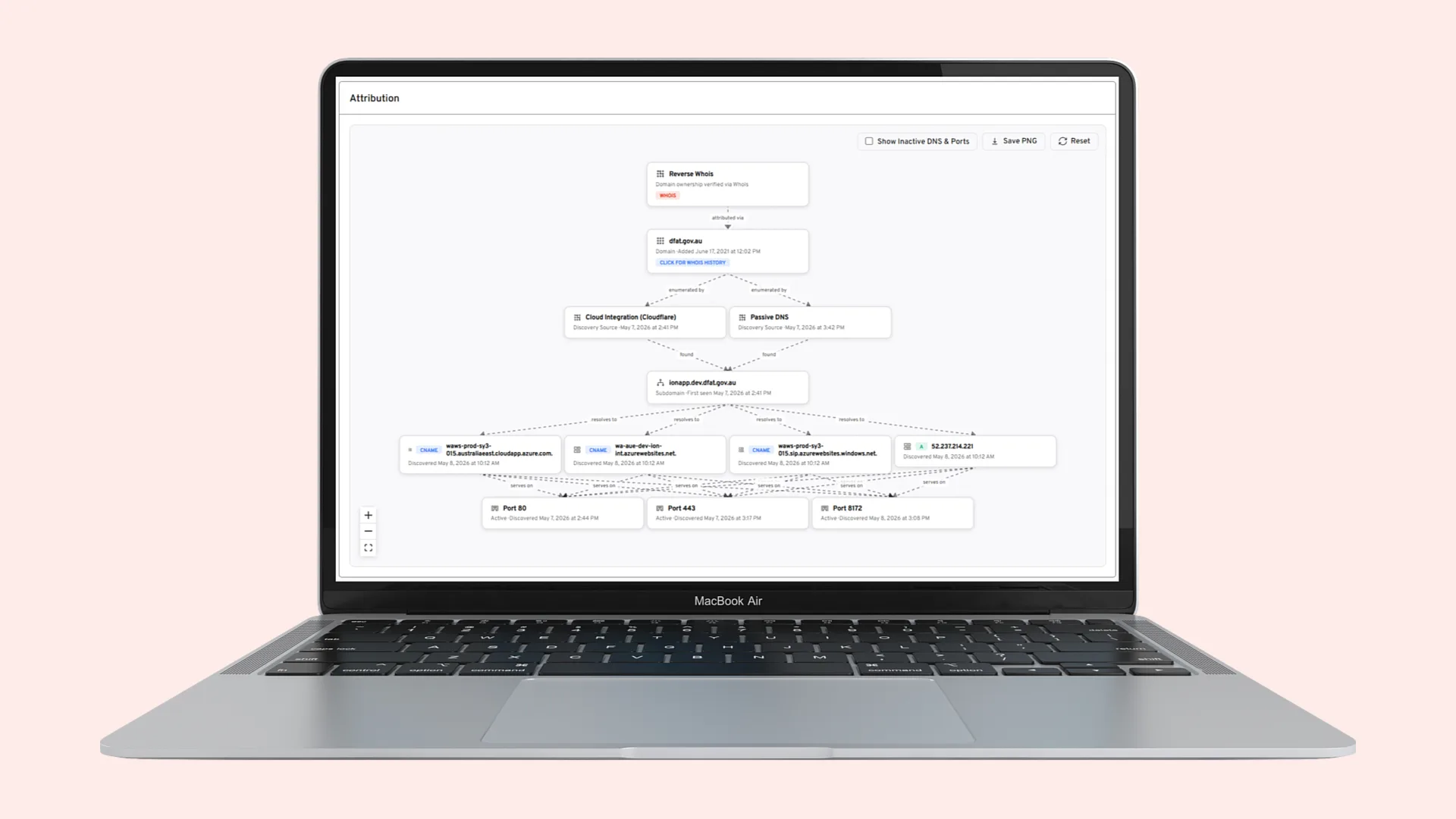
You can’t protect what you can’t see. Vendors should clearly demonstrate how their technology maps, and continuously updates, the assets that make up your organization’s external digital footprint. This should extend beyond your IP addresses to include modern asset types such as third-party cloud services, CDNs, DNS subdomains, SaaS applications, APIs, and other externally exposed tools. Without this depth of visibility, critical exposures can go undetected, increasing the risk of attackers identifying and exploiting gaps before security teams are even aware they exist.
Exposures are not created equally. Tools should use a combination of actionable threat intelligence, business context, and validated exploitability (including PoCs) to prioritize vulnerabilities beyond just CVSS scores. There should also be an option to include customizable prioritization rules that will help you focus your remediation efforts and reduce your window of exposure to attackers.
Ask vendors whether they provide Proofs of Concept (PoCs) or evidence of exploitability for every finding, or if they prioritize PoC generation for the most critical or high-risk findings. In addition to PoCs, what other forms of evidence do they provide to demonstrate exploitability? The right ASM tool should deliver actionable solutions and validated risks, not just a flood of alerts.
Look for a solution that effectively manages noise by reducing false positives and negatives, such as DNS wildcards or unverified assets. The platform should be able to distinguish between genuine, relevant assets and low-value or “junk” data, helping to prevent alert fatigue. By filtering out noise and prioritizing actionable insights, you ensure your team can focus on what truly matters.
Many ASM platforms take an IP-centric approach to asset discovery, which can result in duplicated findings and an inflated view of your attack surface. This often comes from double-counting IP addresses, ports, and related resources. A stronger solution clearly defines and categorizes assets, treating cloud services, subdomains, IP addresses, and APIs as distinct entities. Pricing should also be transparent and predictable, whether it’s based on total assets, IP addresses, or another metric. Ideally, teams have flexibility to choose which assets are monitored and priced, avoiding unnecessary cost as environments evolve.
An effective ASM platform should scale smoothly as attack surfaces grow in size and complexity. It should remain performant while monitoring large environments and provide clear ways to organize assets by geography, business unit, or other criteria. The ability to delegate access and selectively monitor specific parts of the environment helps teams manage both operational workload and costs. Scalability shouldn’t come at the expense of usability or performance, even as asset volumes increase over time.
True ASM should focus on triage and remediation of indicators and vulnerability exposures, not just discovering them. Ask vendors how their solution integrates with ticketing systems (e.g., Jira, ServiceNow), SIEM/SOAR and notification solutions, cloud and CDN platform management (AWS, Azure, Google Cloud, Cloudflare), and other workflow tools you may use. Strong integrations reduce manual effort, improve response times, and help embed ASM insights directly into day-to-day security operations.
ASM tools should be quick to implement, taking no longer than a couple of hours for initial setup thanks to their agentless nature and easy configuration. While initial setup is generally simple, you may need help integrating the tool into existing workflows or other fine-tuning of your settings, so ask about the available support in these areas, including training materials, documentation, and support availability. A smooth onboarding experience is key to seeing results quickly.
Ask the vendor if they rely on publicly disclosed exposures (CVEs) or whether they have an in-house team dedicated to discovering novel exploits that haven’t yet been made public. Being privy to unique vulnerabilities as soon as they’re discovered can give you a significant edge in remediating 0-days long before the patching scramble begins. If the vendor has such a team, can they describe their research methodology and how their findings translate into actionable data within their ASM platform?
Remember, choosing the right ASM vendor isn’t just about ticking boxes, it’s about finding a partner that genuinely understands your external risk and can grow with your security programme. By asking the right questions upfront, you can cut through the noise, avoid blind spots, and ensure the platform you choose delivers meaningful, actionable insight – not just more data.