Share on social
May 20, 2026
Lorem ipsum

[What Is ASM?]
Attack surface management solutions now offer advanced capabilities like hourly scanning that detect threats as they emerge. This blog explores what attack surface management is, how attack surface monitoring works in practice, and what features matter most when you evaluate attack surface management tools.
Key Takeaways
Attack surface management is no longer optional - it's essential for protecting modern organizations from rapidly evolving cyber threats across expanding digital footprints.
- Continuous discovery is critical: Organizations face over 100 new vulnerabilities daily, making hourly scanning necessary to detect threats before attackers exploit them.
- Traditional security falls short: Static approaches miss shadow IT, cloud misconfigurations, and forgotten assets that represent 70 percent of successful attack vectors.
- Risk-based prioritization prevents alert fatigue: Focus on exploitable vulnerabilities with confirmed business impact rather than overwhelming teams with theoretical risks.
- Integration amplifies effectiveness: ASM solutions must connect seamlessly with existing SIEM, SOAR, and ticketing systems to trigger immediate remediation actions.
- Proactive threat intelligence provides competitive advantage: Threat intelligence provides actionable insights and intelligence into real attacker behavior that helps organizations focus on real world threats that could potentially impact your organization.
The key to successful attack surface management lies in choosing solutions that provide real-time visibility, intelligent prioritization, and actionable intelligence - transforming complex exposure data into clear security actions that protect what matters most.
With 100 new vulnerabilities emerging daily, ASM tools that scan only daily or weekly leave critical gaps. As cyber asset inventories grow 133 percent year-over-year and with global cyberattacks rising by 47 percent in early 2025, the need for continuous discovery, analysis, and monitoring of your digital footprint has never been more urgent.
What is attack surface management?
Attack surface management helps organizations discover, monitor, and reduce digital threats in any discipline, both known and unknown. This continuous cybersecurity process turns a complex mix of digital assets into a clear, organized view of what needs protection.
What is an attack surface?
Your attack surface represents the sum of all potential entry points an attacker could exploit to gain unauthorized access to your systems, data, and infrastructure. These entry points span applications, websites, networks, connected devices, and cloud infrastructure.
The attack surface has on-premises infrastructure like legacy servers still connected but no longer managed to keep, cloud services with misconfigured storage buckets, remote endpoints missing security updates, partner platforms lacking strong access controls, and shadow IT such as unauthorized SaaS apps. Every unmonitored device, misconfigured cloud instance, or forgotten web application represents a potential entry point.
How ASM is different from traditional security approaches
Traditional security methods focus on internal assets and known vulnerabilities. They often lack visibility into external-facing assets, shadow IT, and third-party software. These approaches are reactive and respond to threats after they penetrate the network rather than identifying exposures.
Attack surface management solutions take an attacker’s view of your organization and discover assets and vulnerabilities that attackers see when targeting you. Modern ASM provides context about which assets truly pose risk rather than treating all exposures the same.
The continuous nature of attack surface monitoring
Your attack surface changes constantly as new technologies are adopted, systems are updated, or services move to the cloud. Static reports and periodic assessments cannot keep pace with this dynamic environment.
ASM operates through four stages:
- Continuous asset discovery automatically detects new, unknown, or unmanaged assets first.
- Classification then organizes assets by exposure level, business value, and potential impact if compromised.
- Threat assessment identifies vulnerabilities and misconfigurations.
- Ongoing monitoring surfaces emerging exposures before they become entry points.
Advanced platforms integrate novel security research that provides advance warning of vulnerabilities, often months before public disclosure. Security teams can respond faster and with greater confidence through this proactive approach and maintain live visibility as your digital footprint evolves.
[Why Organizations Need ASM Now]
Why do organizations need ASM now more than ever?
Digital transformation has created an unprecedented security challenge. The average enterprise now manages over 1,400 distinct cloud services, yet only 23 percent of organizations maintain full visibility over their cloud environment [1]. This visibility gap turns every unmapped asset into a potential entry point for attackers.
The expanding digital footprint challenge
Your organization's attack surface expands with every new cloud instance, remote endpoint, and third-party integration. The ratio of cyber assets to security practitioners has reached 120,000:1 and makes manual tracking impossible. Nearly 70 percent of organizations experienced at least one cyber attack that exploited an unknown or unmanaged asset [2]. Security teams cannot protect what they cannot see.
Cloud adoption and remote work effect
Remote work changed the security perimeter. The workforce operating remotely at least one day per week increased fivefold to reach 42 percent since 2019 [3]. This change introduced vulnerable home networks and personal devices outside corporate security controls. Microsoft reported that 92 percent of ransomware attacks involved unmanaged devices [4], while analysis revealed 46 percent of compromised systems with corporate logins were non-managed devices [5].
Shadow IT and unmanaged assets
Employees adopt unauthorized tools when sanctioned systems fail to meet their needs. These shadow IT applications bypass security protocols and create blind spots in your defenses. Unmanaged devices sit outside standard patching cycles and run with default credentials or known vulnerabilities that never get addressed. 73 percent of security leaders in 2026 report incidents caused by unknown or unmanaged assets [6].
The speed of emerging threats
Cyber threats evolve at breakneck speed as adversaries become more sophisticated.Threat actors are leveraging Large Language Models (LLMs) and autonomous AI agents as expert-level force multipliers. They use these tools for accelerated code analysis, zero-day research, and automated multi-stage exploitation frameworks, dramatically reducing the time between vulnerability disclosure and weaponization [7]. Because of this acceleration, traditional daily or weekly scanning cannot keep pace.
What are the financial consequences of unmanaged attack surfaces?
The financial effect proves severe. Data breaches now cost an average of $4.44 million globally, while U.S. companies face costs exceeding $10 million [8]. Attack surfaces have widened to the point where 80 percent of medium, high, or critical exposures occur on cloud-hosted assets [9].
[How ASM Works & What to Look For]
How does attack surface management work?
Attack surface management operates through four interconnected stages that work continuously to identify, assess, and address security exposures across your digital environment. Each stage feeds into the next and creates an ongoing cycle that adapts as your infrastructure evolves.
Stage 1: Continuous asset discovery
Asset discovery forms the foundation without which no confirmation capability can compensate]. Security teams scan the internet to find exposed assets tied to your organization, including shadow IT you didn't know existed]. Advanced platforms use machine learning and pattern recognition to copy attacker behavior. They discover forgotten subdomains, cloud instances, and legacy servers not listed in official inventories.
Discovery combines passive and active scanning methods across domain registrations, DNS records, SSL certificates, and cloud API integrations. Assets get enriched with metadata that provides full context such as port details, technology fingerprints, and geolocation information.
Stage 2: Classification and risk prioritization
Knowing an asset exists isn't enough. Security teams must categorize discovered assets by type, owner, business criticality, and technology stack to create a unified inventory. Exposures get scored based on exploitability, business impact, and threat intelligence context rather than raw severity scores alone.
Advanced solutions perform adversarial exposure confirmation by safely simulating attack techniques to confirm if vulnerabilities are exploitable in your specific environment. This confirmation eliminates alert fatigue by filtering theoretical risks and flagging only verified threats with confirmed paths to compromise.
Stage 3: Remediation and response
Confirmed findings trigger concrete actions including patching systems, fixing misconfigurations, tightening firewall rules, or decommissioning unnecessary assets. Remediation workflows integrate with security orchestration platforms and ticketing systems to ensure exposures get addressed actively.
Stage 4: Ongoing monitoring and confirmation
Continuous scanning ensures remediation remains resolved once it completes and prevents policy drift from reintroducing risk. Automated alerts notify teams immediately when assets change and enable rapid response to emerging threats.
What should you look for in attack surface management solutions?
Selecting the right attack surface management solution requires evaluating capabilities that deliver continuous visibility, accurate risk assessment, and smooth integration with your existing security infrastructure. The best platforms automate discovery and scale with your organization's growth while prioritizing threats intelligently.
Automated discovery capabilities
Your ASM solution should uncover internet-facing assets without relying on manual inputs. Look for platforms that discover cloud-assigned hostnames not listed in your DNS, shadow IT deployed outside official channels, and ephemeral services with fast-changing IPs. Advanced solutions employ passive reconnaissance and active scanning to build complete asset inventories.
Integration with existing security tools
Attack surface management rarely operates in isolation. Verify that solutions merge with your SIEM, SOAR platforms, vulnerability scanners, and ticketing systems through native connections or open APIs.
Risk-based prioritization features
Platforms that work move beyond simple CVSS scores. They incorporate exploitability and asset criticality. Solutions should verify vulnerabilities through safe testing and eliminate theoretical risks while surfacing only confirmed threats.
Continuous scanning
Daily scans leave exposure gaps between vulnerability introduction and detection. Hourly scanning closes this window and detects changes as they emerge.
Complete visibility across asset types of all kinds
Your platform must discover assets in multi-cloud environments, on-premises infrastructure, SaaS applications, and third-party connections. Unified visibility across AWS, Azure, GCP, IoT devices, and partner systems prevents blind spots that attackers exploit.
How Searchlight Cyber monitors your external attack surface and dark web exposure
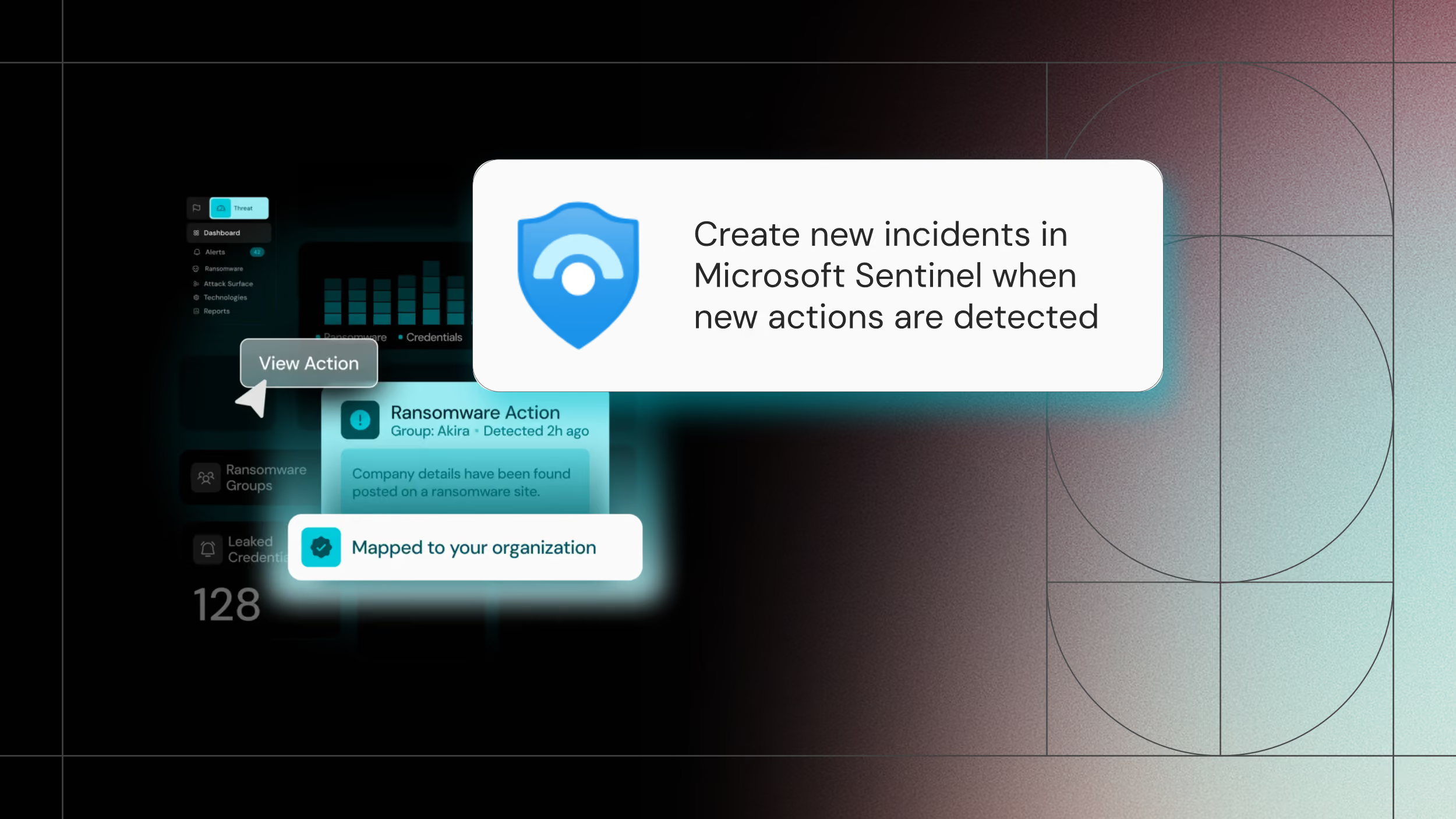
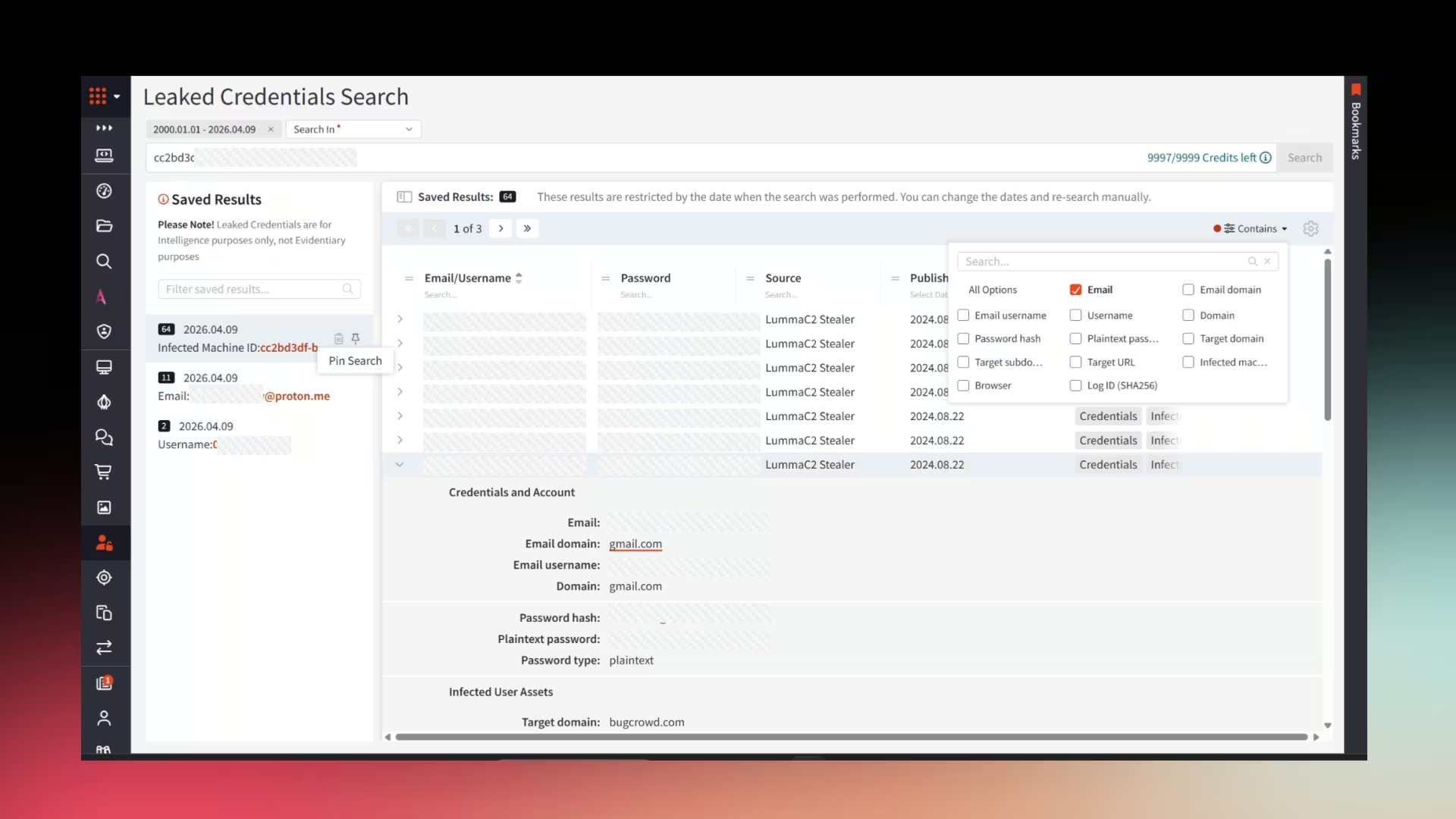
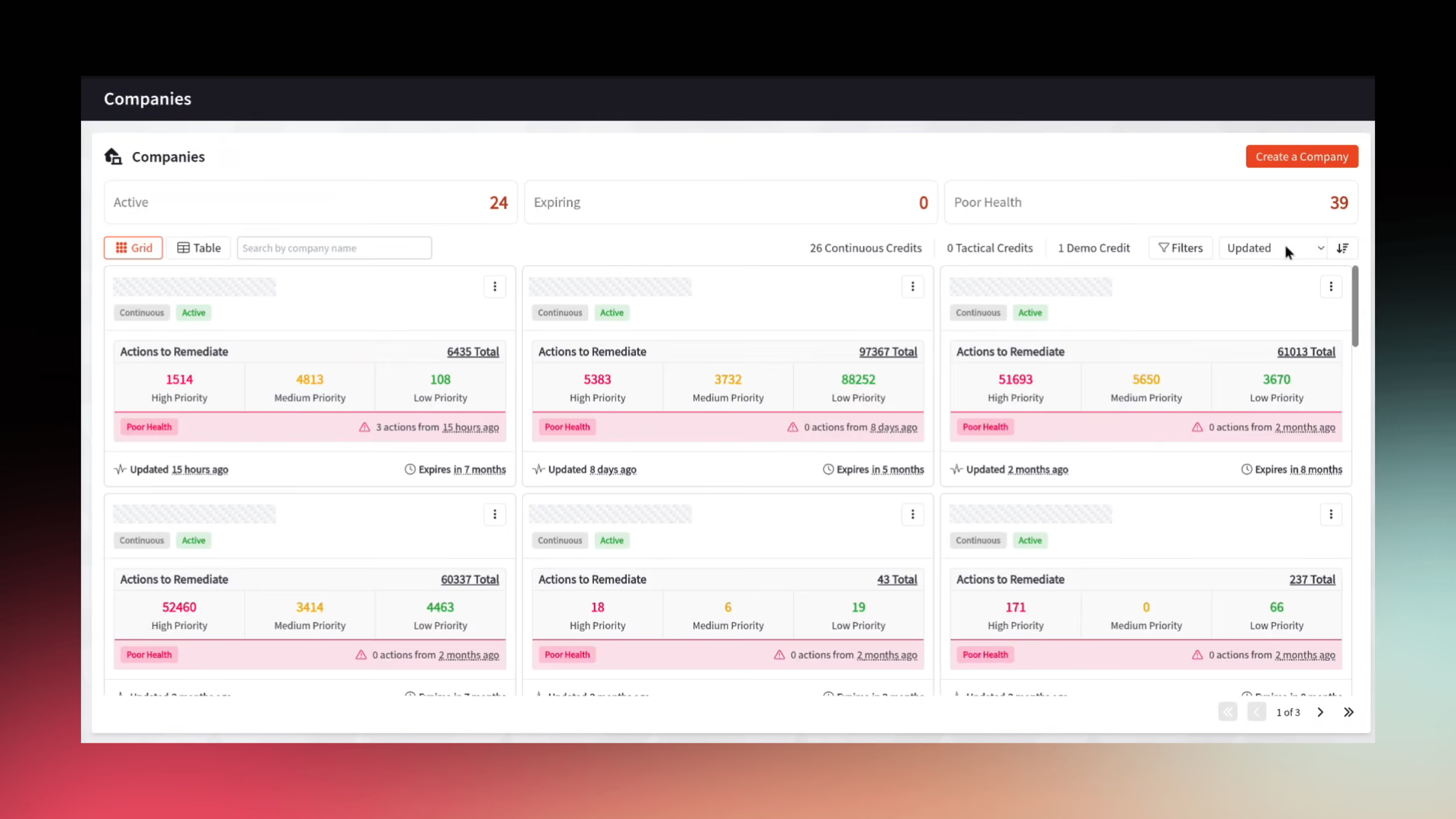
Searchlight Cyber's Attack Surface Management tool continuously maps your external digital footprint by scanning assets hourly, far more frequently than most competing solutions. Starting from a single seed domain, it automatically discovers subdomains, cloud services, APIs, third-party tools, and shadow IT, verifying exposures against specific software versions before alerting your team. This means you receive only high-signal, actionable alerts rather than an overwhelming volume of false positives, allowing you to focus remediation efforts where they matter most.