Post

A new open-source framework designed to help financial institutions fight back against cyber-enabled fraud has been released by MITRE’s Center for Threat-Informed Defense (CTID).
The MITRE Fight Fraud Framework™ (F3) is a first-of-its-kind effort to define and standardise the tactics and techniques used in cyber-enabled financial fraud, developed in response to financial fraud losses reaching $13.7 billion in 2024 alone.
The framework addresses a long-standing structural problem in the industry. Fraud and cyber teams often observe different parts of the same incident, making it difficult to connect behaviours, coordinate response, and reduce financial loss. F3 gives both teams a common language to close that gap.
The framework organises fraudster behaviour into tactics and techniques drawn from real-world incidents, covering the full attack lifecycle: Reconnaissance, Resource Development, Initial Access, Defence Evasion, Positioning, Execution, and Monetisation.
F3 is globally accessible, open, and free to use, and was developed with input from major institutions including JPMorganChase, Lloyds Banking Group, CrowdStrike, and Standard Chartered. Organisations can contribute new techniques and refinements via the project’s public GitHub repository.
US federal authorities are urging critical infrastructure operators to take immediate action after Iranian-linked hackers were found actively targeting industrial control systems across the country.
The FBI, CISA, NSA, EPA, Department of Energy, and US Cyber Command have jointly warned that Iranian-affiliated advanced persistent threat (APT) actors are exploiting internet-facing programmable logic controllers (PLCs) manufactured by Rockwell Automation/Allen-Bradley across multiple critical infrastructure sectors.
Since at least March 2026, the attackers have disrupted PLC functions across Government Services and Facilities, Water and Wastewater Systems, and Energy sectors, with some victims experiencing operational disruption and financial loss.
Authorities say the attackers used legitimate configuration software to gain access to exposed devices, then manipulated data displayed on control system interfaces. The actors also deployed Dropbear SSH software on victim endpoints to maintain remote access.
The advisory calls for immediate steps, including disconnecting PLCs from public-facing internet, enabling multi-factor authentication, and placing physical mode switches into run position to prevent remote modification. Organisations are encouraged to contact CISA or their local FBI field office if they suspect compromise.
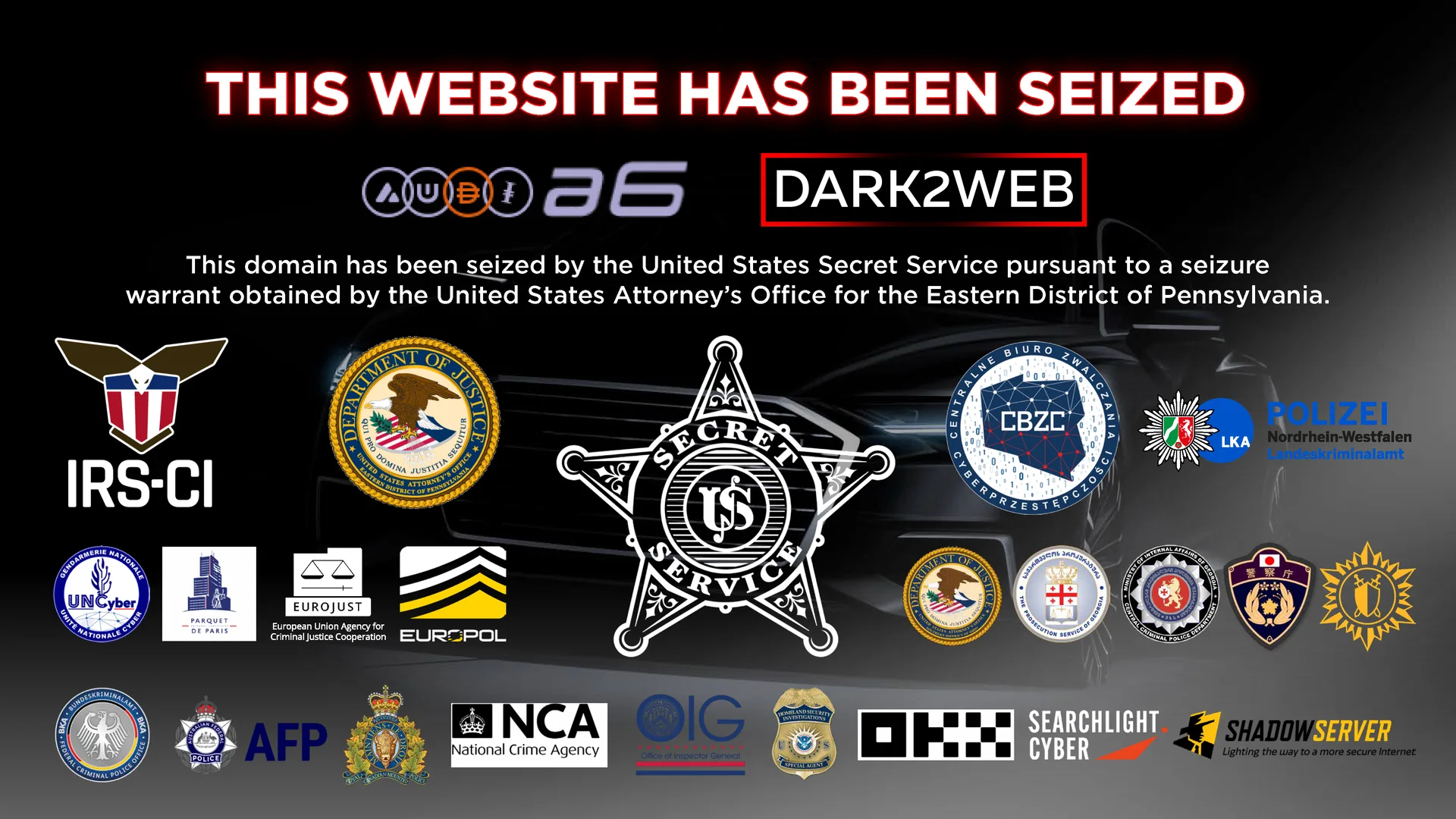
An international law enforcement operation has frozen over $12 million in suspected criminal proceeds and identified more than 20,000 victims of cryptocurrency fraud across the UK, US, and Canada.
Operation Atlantic, coordinated by the NCA, US Secret Service, Ontario Provincial Police, and Ontario Securities Commission, focused on identifying victims who had lost, or were at risk of losing, cryptocurrency through “approval phishing” — a scam where victims are tricked into granting criminals access to their cryptocurrency wallets, often as part of investment scams.
So far, more than $45 million stolen in cryptocurrency fraud schemes has been identified around the world, with one UK victim alone thought to have lost more than £52,000.
Private sector organisations played a critical role in the operation, tracing illicit transactions and identifying victims in real-time so that funds could be secured before criminals moved them.
Miles Bonfield, Deputy Director of Investigations at the NCA, said the operation demonstrated what is possible when international agencies and private industry work together, adding that the NCA would continue to target fraudsters wherever they are based.